A Wall That Breathes
Standard acrylic emulsion paints are essentially petroleum-based plastics spread across a wall. In regions with intense monsoon moisture followed by dry heat, trapped water vapor inside the masonry has nowhere to go, causing paint bubbling, mold blooms, and peeling.
Lime plaster, by contrast, is completely vapor-permeable. It absorbs airborne humidity during damp periods and releases it naturally as temperatures rise, acting as an organic humidity regulator.
“Lime plaster does not deteriorate with age—it undergoes carbonation, slowly turning back into solid limestone.”
The Softness of Mineral Pigments
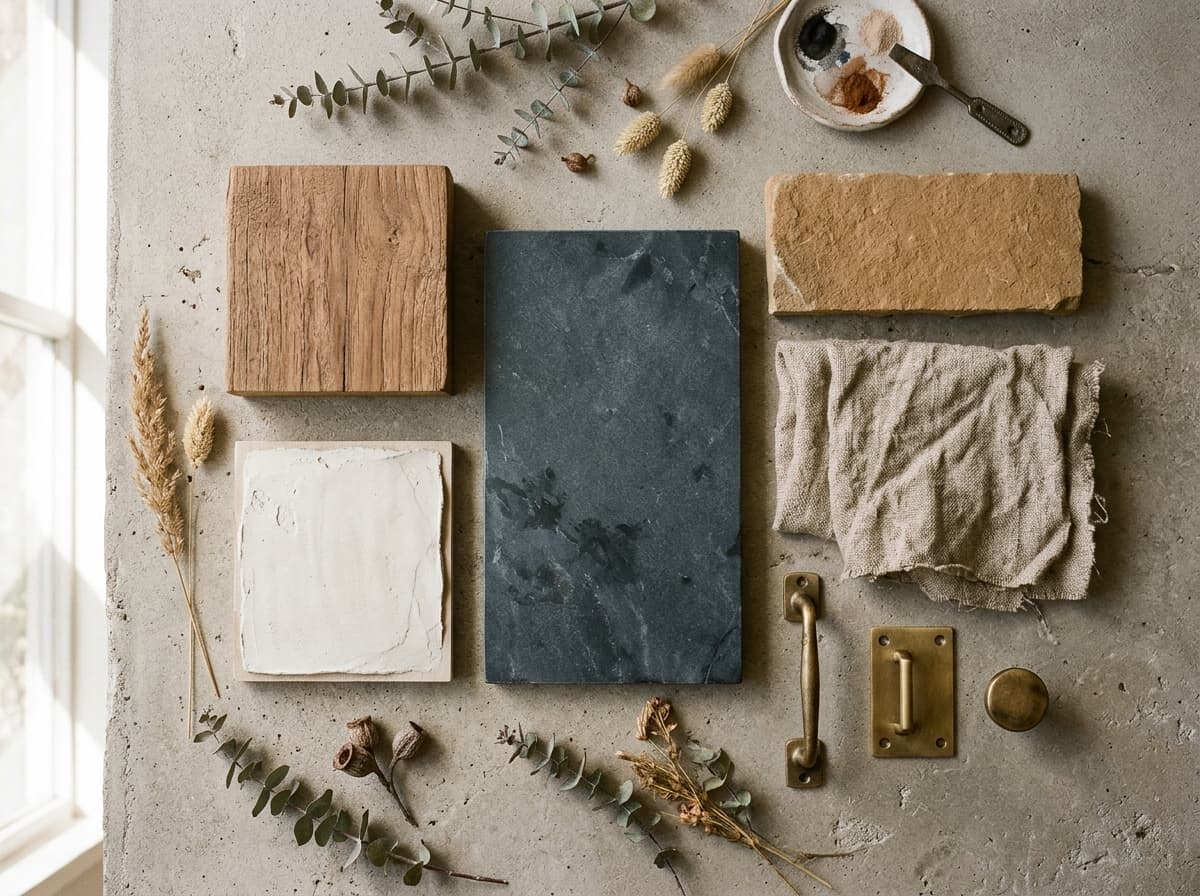
Synthetic paints reflect light with a harsh, plastic sheen. Lime plaster, with its microscopic crystalline facets, scatters light in every direction. It creates an undeniable velvety depth that shifts subtly in tone between morning sun and evening candlelight.
When pigmented with natural ochres, sienna soils, and ground marble aggregates, the walls feel like an extension of the earth itself.
Stone and Light Studio
We design and build enduring residential and workspace sanctuaries across Vijayawada, Hyderabad, Amaravati, and Guntur. Questions or comments regarding this article? Email us at hello@stoneandlight.com.